


Designing for Everyone: Why Accessibility Is the Future of UX?
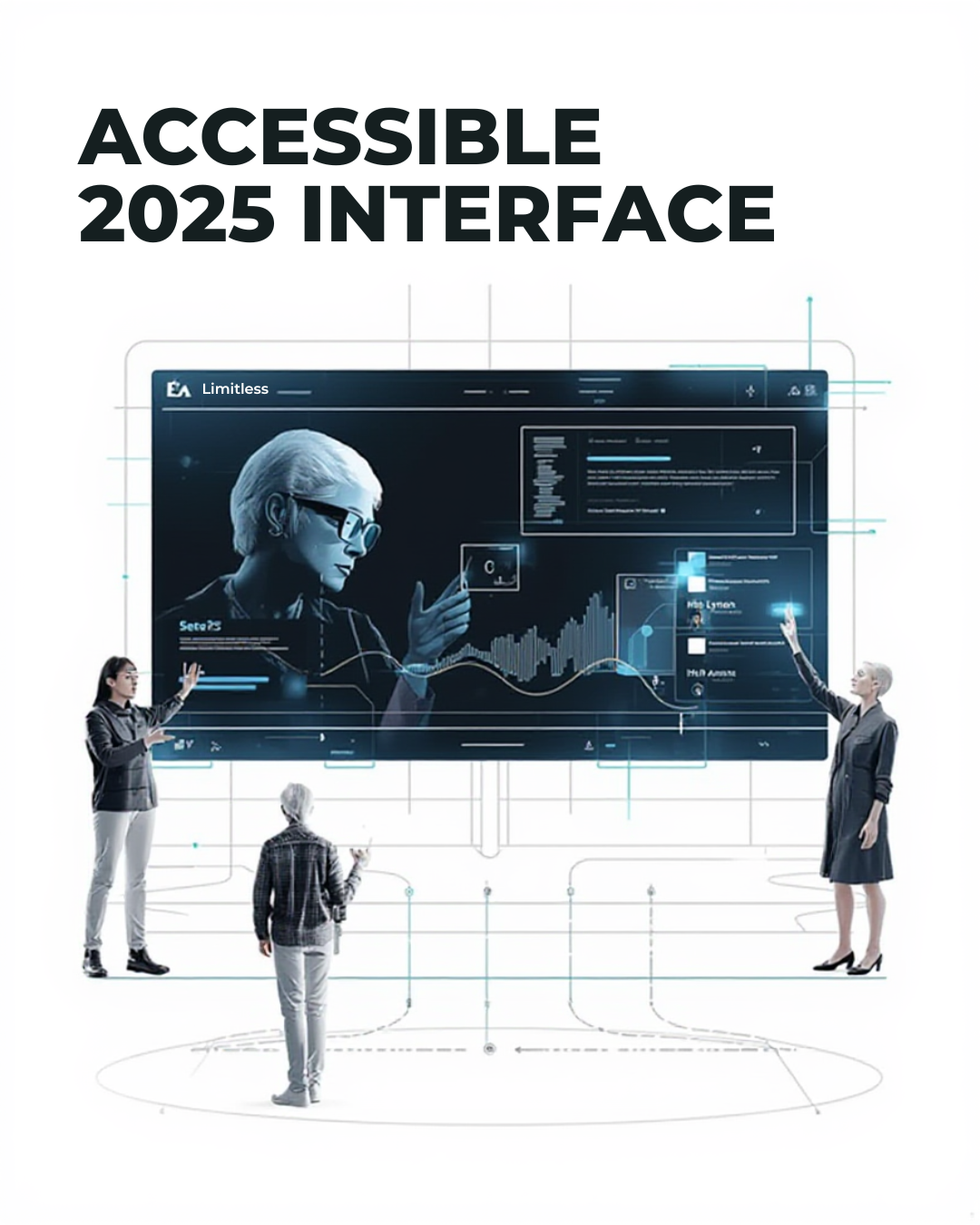
In 2025, the definition of “good design” has evolved. It’s no longer just about how something looks — it’s about how it works for everyone. Accessibility is now the foundation of great user experience (UX). Designers and developers across the world are realizing that inclusive design isn’t a trend — it’s a responsibility.
What Accessibility in UX Really Means
Accessibility means creating digital experiences that everyone can use, regardless of physical, visual, auditory, or cognitive limitations. It’s about ensuring that no one is excluded because of design choices. Whether it’s using high-contrast colors for visibility, providing captions for videos, or enabling keyboard navigation, accessibility helps make the web truly open to all.
In the past, accessibility was treated as a checklist or an afterthought. But today, it’s becoming a core principle of UX — shaping everything from layout and typography to interactions and animations.
Why Accessibility Matters More Than Ever
The world is digital, and millions of people rely on technology daily — including those with disabilities. According to recent studies, over 1 billion people globally live with some form of disability. When design ignores accessibility, it unintentionally shuts them out.
But accessible design doesn’t just help those with disabilities — it benefits everyone. Captions help people in noisy environments, clear fonts improve readability for all ages, and intuitive navigation enhances overall usability. In other words, accessible design is simply better design.
Accessibility and Brand Reputation
In 2025, accessibility is also a sign of ethics and empathy. Brands that prioritize it are seen as responsible and people-centered. Accessibility shows that your company values every user equally — building trust and loyalty. On the other hand, neglecting accessibility can damage reputation, invite legal risks, and limit audience reach.
Companies like Apple, Microsoft, and Airbnb are leading by example — integrating accessibility deeply into their UX processes. Their success proves that inclusive design is not a limitation but a powerful opportunity to innovate.
Key Elements of Accessible UX Design
Readable Typography: Use legible font sizes, adequate spacing, and proper contrast.
Color Contrast: Ensure text is visible on all backgrounds — avoid relying solely on color to convey meaning.
Keyboard Navigation: Make sure users can interact with your site using a keyboard alone.
Alt Text for Images: Provide descriptive text for visuals to help screen readers interpret content.
Captions and Transcripts: Make multimedia content accessible to everyone.
Responsive Design: Adapt layouts for different screens and assistive technologies.
Accessibility should be considered from the very first design phase — not added later.
The Future of Inclusive UX
AI and automation are also transforming accessibility in UX. Tools now help designers test contrast ratios, simulate impairments, and automatically suggest improvements. Voice-controlled interfaces, adaptive layouts, and personalized accessibility settings are making digital products more inclusive than ever.
In the future, accessibility won’t be a “feature.” It will be the standard — the foundation of human-centered design.
Designing for everyone isn’t just the right thing to do — it’s the smart thing to do. Because the best experiences are those that include everyone.